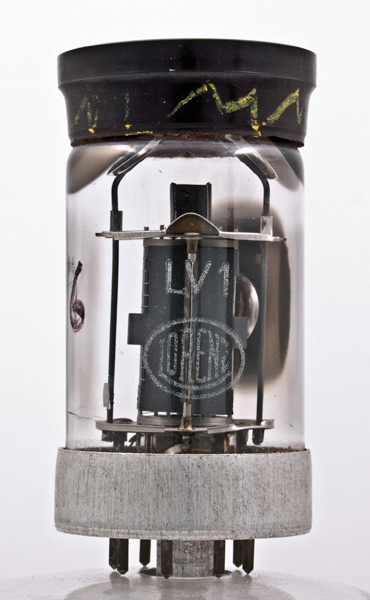
The LV1 is a WWII low noise RF pentode that dates from 1941. Noise is reduced by running with a high anode current and this valve could operate with 20 mA. It was used at around 125 MHz at the front end of the German Freya ground radar. The base has eight short solid pins at the same pin diameter as the B8B base. The spigot is shorter than the Loctal base and the locating pip is not mid way between two pins.
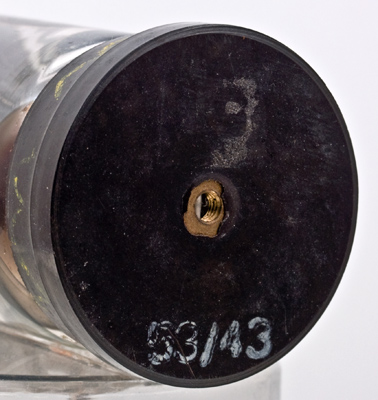
The LV1 is unusual in that there is a plastic moulding on the top of the envelope that is fitted with a threaded brass insert. This insert allowed a moulded top handle to be fitted for easy removal, and this was a feature of many German military valves.
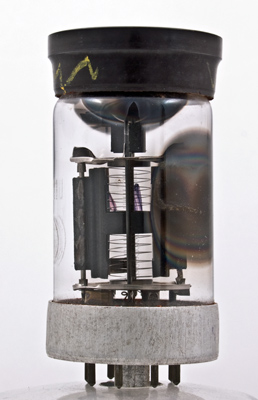
The side view reveals that the anode is formed with only a strap at the side and two main collecting areas on either side of the grid assembly. The suppressor grid runs close to the anode and is an open spiral. The screen grid is much closer to the central axis and the fine pitch control grid is mounted close to the cathode.
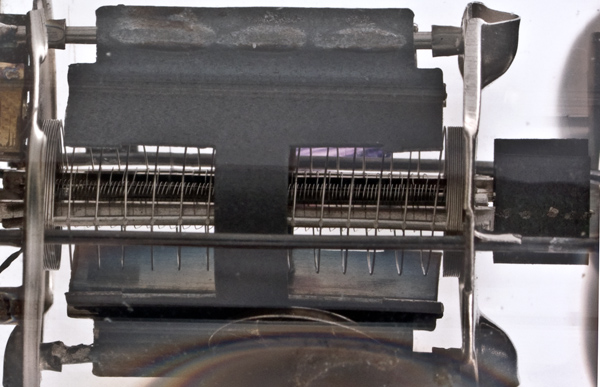
The grids seen in almost plan view. The relative sizes and winding pitches are clear to see.
The plastic top with threaded brass insert.
The wide glass tube envelope is 30 mm in diameter, and excluding the special base pins is 58 mm tall.
References: Data-sheet Type LV1 was first introduced in 1941. See also1941 adverts.